14x36x1 Ceiling Return Filters for Mobile Homes | Sizing Guide
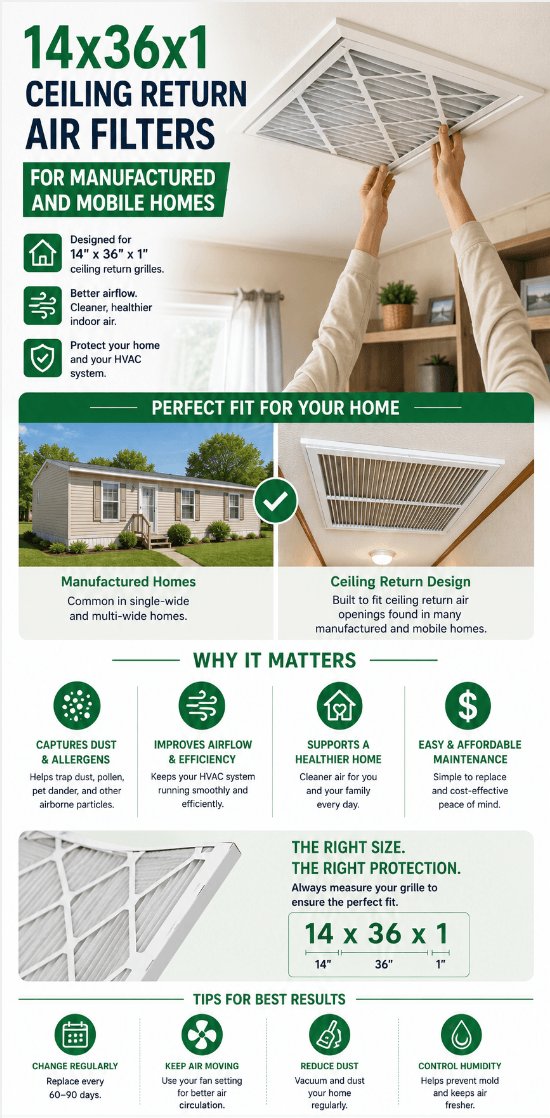
A 14x36x1 filter is long and narrow because the ceiling return grilles in most single-wide manufactured homes are built the same way, to fit a home that's typically only 14 to 18 feet wide. Before you order one, measure your actual grille opening rather than trusting the size printed on the last filter, and pick MERV 8, 11, or 13 based on how sensitive your household is to dust and allergens.
TL;DR:
If your manufactured or mobile home has a long, narrow return grille in the hallway or living room ceiling, there's a good chance it takes a 14x36x1 filter. That size exists because single-wide homes are framed narrow, so their central return duct runs long and thin down the ceiling instead of square, the way it might in a site-built house.
Key Takeaways
- A 14x36x1 filter's actual dimensions are 13.5" x 35.5" x 1", not a full 14x36. Always check actual size before ordering.
- Single-wide manufactured homes are typically 14 to 18 feet wide, which is why their central ceiling return grilles run long and narrow instead of square.
- Return grilles in manufactured housing show up in the ceiling, a hallway wall, or the furnace closet door, so confirm the location before assuming the size.
- This size is sold in MERV 8, 11, and 13, covering basic dust capture up through finer allergen and smoke particles.
- Measuring the grille opening yourself is more reliable than reordering the size stamped on your old filter, especially if a previous owner installed a mismatched one.
Why Mobile and Manufactured Homes Use the 14x36x1 Size
Here's the connection I don't see spelled out on most filter-sizing pages: it traces straight back to a federal rule. Manufactured homes built to HUD's construction code fall into set width categories, and single-wide models run roughly 14 to 18 feet wide. That width is the actual reason for the grille shape, not a coincidence alongside it. A home that's only 14 feet wide can't fit a square 20x25-style central return the way a site-built house does. So the return duct gets built long and thin instead, running the width of the ceiling in a central hallway, and the filter that covers it ends up in the same long, narrow shape. A 14-inch-wide filter fits that constraint, and 36 inches of length gives the system enough surface area to breathe. Once you see it framed that way, the size stops looking arbitrary.
It's the same logic behind other narrow filter sizes common in manufactured-home systems, where the grille shape follows the home's footprint rather than a standard square cut.
Does This Apply to Your Home? Check the Age First
This sizing logic only holds for homes built to the federal HUD code, which took effect June 15, 1976. Anything built before that date is technically a “mobile home” rather than a “manufactured home” in the strict legal sense, and it wasn't built to any national width standard. If your home predates 1976, don't assume the 14x36x1 pattern applies. Older units sometimes used custom or regionally common sizes that don't match anything sold as a standard nominal size today. The fix is the same either way: measure the actual opening. But the odds of landing on a true 14x36x1 are higher in a post-1976 single-wide than in an older unit.
Where Does This Filter Usually Sit in a Mobile Home?
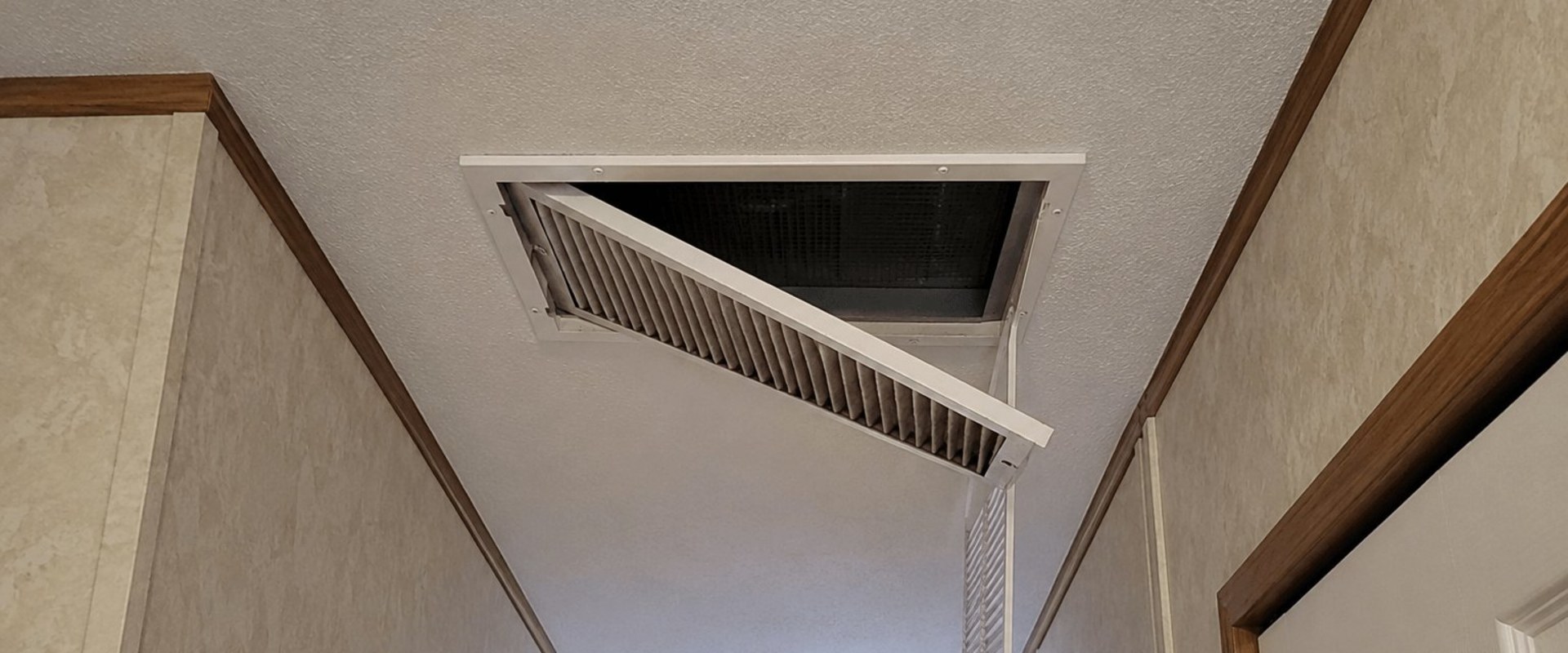
The return grille in a manufactured home can sit in three different places: a ceiling opening, a wall opening (often in a hallway), or built into the furnace closet door itself.
The U.S. Department of Energy's Building America Solution Center describes the same three placements for return grilles generally, noting the grille is installed in a central location so it can pull air efficiently back to the furnace or air handler. If your home was built with the filter behind a hallway ceiling panel rather than a wall grille, 14x36x1 is one of the more common sizes you'll find there.
A ceiling-specific installation note most guides skip: a wall or hallway grille won't fall on you when you open it. A ceiling grille will, if you unlatch it with one hand while nothing is holding the other side up.
The DOE's own installation guidance specifically calls this out for overhead grilles: hold the grille with one hand while you unlatch it with the other, so it lowers under control instead of dropping. That's a small detail, but it only matters once your filter happens to be over your head instead of on a wall.
How to Confirm Your Grille Actually Takes a 14x36x1
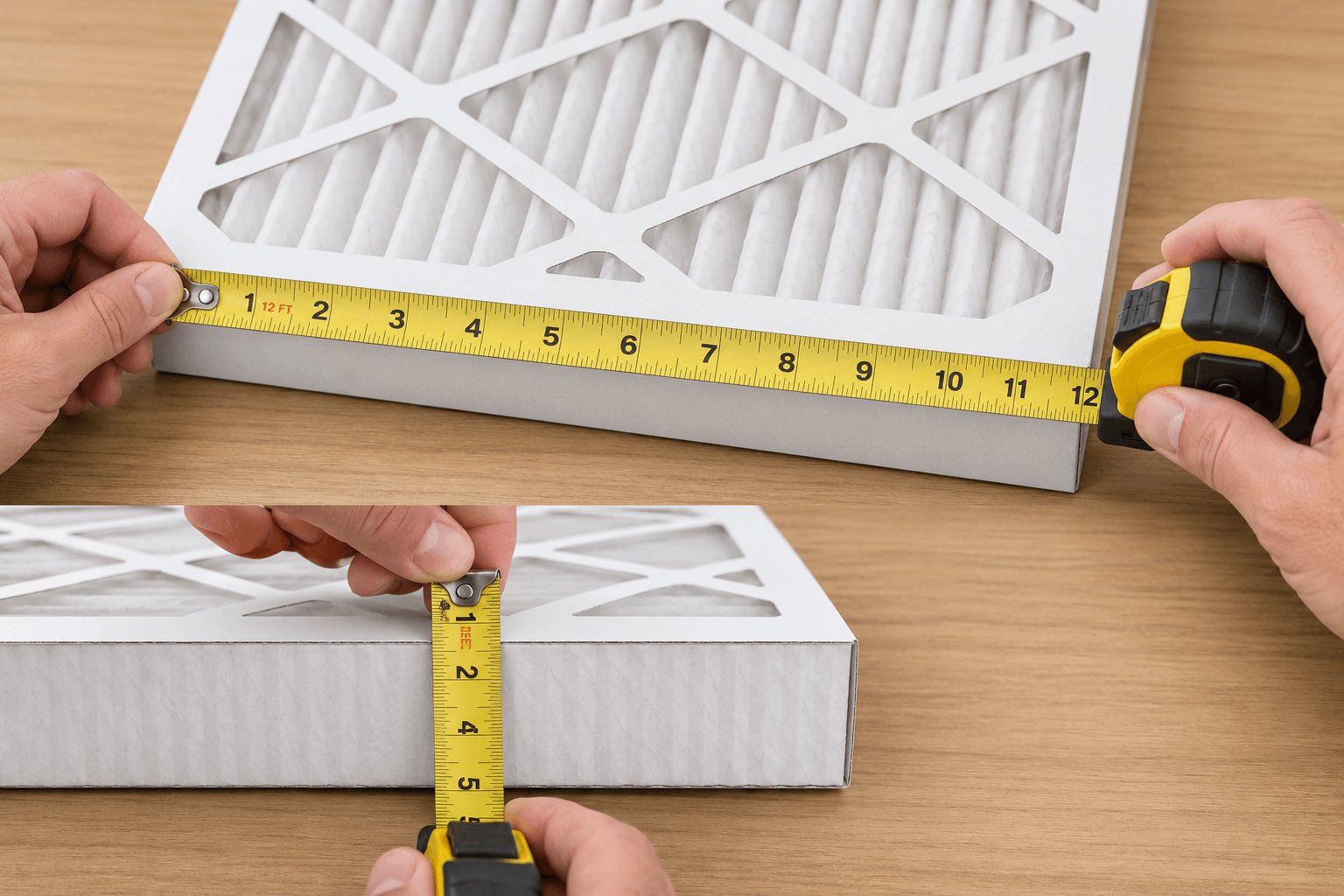
Don't assume your grille takes this size just because your home is a single-wide. Pull the current filter and measure it yourself: width first, then length, then thickness. A true 14x36x1 filter is cut to 13.5 inches by 35.5 inches by 1 inch, a half-inch undersized on each edge so it slides into the frame without binding. This nominal-versus-actual gap isn't unique to this size, either.
It shows up across other filter dimensions for the same reason: clearance for a clean installation. If your old filter measures noticeably different, order to that measurement instead of the nominal size printed on the box.
If your measurement doesn't match anything standard: older single-wides in particular sometimes have grilles cut to a size that doesn't correspond to any nominal filter sold today, off by an inch or two in either direction. If that's what you find, you have three options: find a supplier that will custom-cut a filter to that exact size, tape a slightly smaller standard size around the edges to close the gap (not ideal long-term, but functional), or have a local HVAC tech swap in a new grille frame sized to a standard filter during a single visit.
What MERV Rating Should You Choose for a Mobile Home System?
This size is available in MERV 8, 11, and 13, which lines up with the MERV range used across most standard HVAC filter sizes. MERV 8 handles everyday dust and lint and is the baseline most manufacturers recommend for standard use. MERV 11 steps up to catch more pet dander and mold spores, which matters in a smaller home where airborne particles concentrate faster simply because there's less total air volume to dilute them in. MERV 13 goes further, catching finer particles like smoke and some bacteria. Check your system's blower capacity before jumping straight to the highest rating, since a denser filter restricts airflow more than a lower one.
Ordering the Right Replacement
Once you've confirmed the measurement and picked a MERV level, you can browse Filterbuy's current 14x36x1 air filter lineup here to compare pricing across the three ratings. Whatever source you order from, keep the actual-size measurement on hand so you're not guessing between listings that use slightly different nominal labels for the same physical filter.
"The first thing I tell people is to stop reordering the size printed on the old filter and go measure the grille opening themselves — in single-wides especially, I've seen plenty of homes where a previous owner installed a mismatched size, and nobody caught it for years. The 14x36x1 isn't an arbitrary shape either; it's the home's own 14-foot footprint showing up in the ceiling."
— Kathe Menze
Essential Resources for Choosing and Installing a 14x36x1 Air Filter
Before buying or replacing a 14x36x1 filter, these seven authoritative sources answer the questions that come up most: which MERV rating fits your system, where the filter actually sits in a manufactured home, and why filtration matters for health.
How to Match a MERV Rating to Your HVAC System
The EPA's Guide to Air Cleaners in the Home explains the MERV, FPR, and MPR rating systems and gives a direct method for checking whether your furnace fan can handle a higher-efficiency filter before you buy one.
https://www.epa.gov/indoor-air-quality-iaq/guide-air-cleaners-home
Why Your Filter Sits in a Ceiling Grille Instead of the Furnace Cabinet
The U.S. Department of Energy's Building Science Education program lays out exactly when a filter belongs in a return grille versus the air handler itself, the direct answer to why a manufactured home's filter is often overhead.
https://bsesc.energy.gov/energy-basics/hvac-proper-installation-filters
A Step-by-Step Walkthrough for Changing the Filter Yourself
ENERGY STAR's guide covers locating the filter, confirming airflow direction, and how often to check it, and specifically notes that ceiling and hallway locations are common in some home layouts.
https://www.energystar.gov/products/ask-the-experts/how-keep-your-hvac-system-working-efficiently
What HUD Rules Mean for Your Manufactured Home's HVAC System
HUD's Manufactured Housing Homeowner Resources page covers the federal construction standards, installation oversight, and warranty rules that apply specifically to manufactured and mobile homes.
https://www.hud.gov/hud-partners/manufactured-home-resources
The Health Case for Taking Filtration Seriously
NIEHS-funded research on indoor air pollutants explains the health reasoning behind filtration, going beyond specs to why indoor air quality affects respiratory and cardiovascular health.
https://www.niehs.nih.gov/health/topics/agents/indoor-air
A Plain-Language Starting Point on Indoor Air Pollution
The National Library of Medicine's MedlinePlus page identifies the main sources of indoor air pollution and links out to further federal guidance for anyone new to the topic.
https://medlineplus.gov/indoorairpollution.html
Why Allergy and Asthma Households Often Need a Higher MERV
This ATSDR environmental medicine module explains how higher-efficiency filtration reduces exposure to dust mite, pet, and mold allergens, useful context when deciding between MERV 8, 11, and 13.
https://archive.cdc.gov/www_atsdr_cdc_gov/csem/asthma/treatment_management_prevention.html
Supporting Statistics
1. Mobile Homes Are a Real Slice of U.S. Housing
- 6.64 million U.S. housing units are mobile homes.
- Source: U.S. Energy Information Administration, Residential Energy Consumption Survey.
https://www.eia.gov/consumption/residential/data/2024/hc/pdf/HC10.8_2024.pdf
2. Asthma Affects Almost 1 in 12 Americans
- Nearly 28 million people in the U.S. have asthma (about 8% of the population).
- This is a common reason households upgrade from MERV 8 to MERV 11 or 13.
- Source: Asthma and Allergy Foundation of America.
https://aafa.org/asthma/asthma-facts/
3. Most U.S. Homes Already Have a Measurable Allergen Problem
- About 4 out of 5 U.S. homes have detectable dust mite allergen in at least one bed.
- Supports the case for regular filter replacement, even without an obvious dust or pet issue.
- Source: American Lung Association.
https://www.lung.org/clean-air/indoor-air/indoor-air-pollutants/dust-briefing
FAQ
Is 14x36x1 only used in mobile homes?
No. It shows up in some site-built homes and light commercial spaces too, but it's especially common in single-wide manufactured homes because of their narrow ceiling return layout.
Can I use a thicker filter than 1 inch if it fits?
Only if your grille frame has the depth for it. A thicker filter with deeper pleats generally lasts longer and filters more efficiently, but forcing a filter that's too thick for the frame can leave gaps that let unfiltered air bypass it.
What if my home was built before 1976 and the size doesn't match anything standard?
That's common in older mobile homes, which predate the HUD code and its sizing conventions. Measure the actual opening and look for a supplier that offers custom-cut filters, or ask a local HVAC tech about swapping in a standard-size grille frame.
How often should I replace it?
Every 1 to 3 months is standard guidance for this filter class, and homes with pets or allergy concerns often do better on the shorter end of that range.
Getting the Ceiling Return Right
A correctly sized filter at your ceiling return keeps a manufactured home's smaller HVAC system running the way it was designed to. Measuring once before you order saves a return trip and a mismatched frame down the line.
Glossary
- Nominal size: The rounded-off size printed on a filter's packaging (e.g., 14x36x1), used for shopping and matching to your grille label.
- Actual size: The true, slightly smaller dimensions of the filter itself (13.5"x35.5"x1" for this size), sized to fit the frame without binding.
- MERV: Minimum Efficiency Reporting Value, a 1 to 16 scale rating how much airborne particulate a filter captures. Higher numbers catch smaller particles but restrict airflow more.
- Return grille: The covered opening, in a ceiling, wall, or furnace closet door, where a home pulls air back into the HVAC system through the filter.
- Single-wide: A manufactured home built and shipped as one section, typically 14 to 18 feet wide under HUD construction standards.
- HUD code: The federal construction and safety standard that applies to manufactured homes built after June 15, 1976. Homes built before that date are legally “mobile homes” and weren't built to this standard.
Learn more about HVAC Care from one of our HVAC solutions branches…
Filterbuy HVAC Solutions - Miami FL - Air Conditioning Service
1300 S Miami Ave Apt 4806 Miami FL 33130
(305) 306-5027
https://maps.app.goo.gl/Ci1vrL596LhvXKU79